You cannot improve what you do not measure, and in SEO, rank tracking is the most fundamental measurement that connects your optimization efforts to tangible results. Yet rank tracking in 2026 has evolved far beyond simply checking "what position am I for keyword X?" The modern search landscape features personalized results, localized SERPs, SERP feature diversity, and device-specific rankings that make a single position number almost meaningless without context. According to a 2025 Search Engine Journal study, SEO teams that use advanced rank tracking methodologies identify ranking opportunities 3.2x faster than those relying on basic position checks. This guide covers everything from choosing the right tracking tool to building dashboards that drive strategic decisions.

Why Rank Tracking Still Matters in 2026
Some industry voices have questioned whether rank tracking remains relevant given the personalization and variability of modern SERPs. The answer is an emphatic yes, but with important caveats about how you track and what you track beyond raw positions.
The Case for Systematic Rank Tracking
- Algorithm Update Impact: When Google rolls out a core update, rank tracking data provides the earliest and most granular signal of impact. Traffic changes in Google Analytics lag by days or weeks. Rank changes appear immediately, allowing you to identify affected pages and begin recovery analysis before significant traffic loss materializes.
- Content Optimization Validation: After updating a page's title tag, meta description, content depth, or internal linking, rank tracking confirms whether the optimization produced the desired result. Without this feedback loop, you are optimizing blindly, unable to determine which tactics work and which do not.
- Competitive Intelligence: Monitoring competitor rankings alongside your own reveals market dynamics, emerging threats, and competitive response patterns. If a competitor suddenly starts ranking for keywords you dominate, early detection gives you time to respond before traffic shifts permanently.
- ROI Justification: For agencies and in-house SEO teams, rank improvement is the most tangible evidence of SEO work's value. Stakeholders may not understand crawl budget optimization, but they understand moving from position 8 to position 3 for a high-value keyword.
- Content Strategy Direction: Tracking which keywords move up versus down across your entire portfolio reveals which topic areas are gaining authority and which are losing ground. This informs resource allocation for content creation and optimization.
Daily vs. Weekly Tracking: Choosing the Right Frequency
Rank tracking frequency is a trade-off between data freshness and noise reduction. More frequent tracking provides faster signal detection but also amplifies SERP volatility that can create false alarms. The right frequency depends on your situation and the stability of your target SERPs.
When to Track Daily
- During Algorithm Updates: When Google confirms a core update is rolling out (typically over 2-3 weeks), switch to daily tracking to capture the progression of ranking changes and identify patterns as the update stabilizes.
- After Major Changes: Following a site migration, redesign, major content overhaul, or technical SEO implementation, daily tracking catches any negative impacts quickly enough for rapid remediation.
- Highly Competitive Niches: In industries where rankings shift frequently (news, finance, health), daily tracking is essential to maintain awareness of competitive dynamics and respond to challenger content promptly.
- YMYL Topics: Your Money or Your Life keywords experience more frequent algorithm-driven volatility. Daily tracking for your most valuable YMYL keywords enables proactive management.
When Weekly Tracking Suffices
- Stable Niches: Industries with slow-moving SERPs where position changes are gradual and competitors publish infrequently. Weekly data provides sufficient trend resolution without the noise of daily fluctuations.
- Long-Term Content: Evergreen content that targets informational keywords with stable intent typically exhibits gradual ranking movement. Weekly snapshots capture the trend without overwhelming you with data.
- Budget Considerations: Most rank tracking tools charge based on keyword volume and check frequency. For organizations tracking thousands of keywords, weekly checking can reduce costs by 70-85% compared to daily tracking while preserving strategic visibility.
"Rank tracking data is like a stock ticker. Watching it every minute will make you anxious and reactive. Checking it at strategic intervals will make you informed and proactive. The frequency should match your decision-making cadence, not your curiosity."
Local vs. National Rank Tracking
Google search results vary dramatically based on the searcher's location, and failing to account for this in your rank tracking creates a dangerously distorted picture of your organic performance. A business ranking #1 nationally may rank #15 in specific cities, and a local business ranking #1 in their city may not rank at all 50 miles away.
Configuring Location-Specific Tracking
- City-Level Tracking: For local businesses, track rankings at the city level for every service area. A dentist serving three cities should track each keyword for each city separately. Tools like BrightLocal and Whitespark specialize in local rank tracking with zip-code-level precision.
- State/Regional Tracking: For regional businesses or multi-location brands, track at the state or metropolitan area level to understand geographic performance patterns. Ranking disparities across regions often indicate local citation, content, or link profile gaps.
- National Tracking: For e-commerce and national brands, track from a "neutral" location (or use the tool's national tracking mode) to measure overall organic visibility. But supplement with city-level tracking for your highest-value markets to detect localized competition.
- International Tracking: If you target multiple countries, track each country and language combination separately. A page ranking #3 in the US may rank #30 in the UK for the same keyword due to localization preferences, different competitors, and country-specific content quality signals.

Mobile vs. Desktop Ranking Differences
Since Google moved to mobile-first indexing, mobile rankings have become the primary concern for most websites. However, significant ranking differences between mobile and desktop persist, and understanding these differences is essential for optimization prioritization.
Why Rankings Differ by Device
- Page Experience Signals: Mobile page speed, touch-friendly design, and Core Web Vitals performance directly impact mobile rankings. A page with excellent desktop performance but poor mobile experience will rank lower on mobile SERPs.
- SERP Layout Differences: Mobile SERPs display fewer organic results per screen, making each position more valuable. Features like "People Also Ask" boxes, local packs, and knowledge panels occupy more relative space on mobile, pushing organic results further down the page.
- User Behavior Signals: Mobile users exhibit different click, scroll, and engagement patterns than desktop users. Google factors these behavioral signals into rankings, which can create device-specific ranking differences for the same keyword.
- Local Intent Amplification: Google interprets many more queries as having local intent on mobile devices than on desktop. A search for "restaurants" on a phone almost always returns local results; on desktop, it might return informational content about restaurant types or chains.
SERP Feature Tracking: Beyond Traditional Rankings
In 2026, the traditional "10 blue links" SERP is essentially extinct. Modern search results pages are rich mosaics of featured snippets, People Also Ask boxes, knowledge panels, video carousels, image packs, local packs, and AI Overviews. Tracking only your organic position without tracking SERP features means you are measuring only a fraction of your search visibility.
Key SERP Features to Track
- Featured Snippets: Track which of your pages hold featured snippets and which competitor pages hold snippets you could potentially win. Featured snippet positions receive significantly higher CTR than standard organic results, making them priority targets.
- People Also Ask (PAA): Monitor which questions appear in PAA boxes for your target keywords. These questions represent user intent variations that your content should address. Appearing in PAA boxes provides additional visibility beyond your organic listing.
- AI Overviews (SGE): Google's AI-generated answers are becoming increasingly common. Track whether AI Overviews appear for your keywords and whether your content is cited as a source. This emerging SERP feature is reshaping click distribution patterns.
- Video Carousels: For keywords where video carousels appear, track whether your YouTube or video content appears in the carousel. Video results can capture clicks that would otherwise go to text-based organic results.
- Local Pack: For any keyword triggering a local pack, track your map pack position separately from your organic position. Local pack results capture 42% of clicks for local queries, making this often more important than organic ranking.
Share of Voice: The Definitive Competitive Metric
Share of Voice (SOV) aggregates all your ranking data into a single metric that represents your overall organic visibility relative to competitors. It accounts for ranking positions, search volumes, and estimated CTR curves to produce a percentage that represents your share of available organic clicks in your market.
Calculating and Using SOV
- Define Your Keyword Universe: Select the complete set of keywords that represent your addressable organic market. Include commercial terms, informational terms, brand terms, and long-tail variations. The more comprehensive your keyword universe, the more accurate your SOV calculation.
- Track All Competitors: Include all domains that appear in your keyword universe, not just your identified competitors. Sometimes the biggest threat to your SOV is a domain you did not consider a competitor until the data revealed their presence.
- Segment by Intent: Calculate SOV separately for different intent categories. Your commercial keyword SOV directly correlates with organic revenue potential, while your informational keyword SOV indicates topical authority and brand awareness.
- Trend Over Time: A single SOV number is a snapshot. Monthly SOV tracking reveals whether you are gaining or losing organic market share. Correlate SOV changes with your SEO activities to measure the real impact of specific initiatives, informed by data from competitive analysis.
Tools Comparison: Choosing Your Rank Tracker
The rank tracking tool market offers solutions ranging from free basic trackers to enterprise platforms tracking millions of keywords. Your choice should balance accuracy, feature depth, scale, and budget.
Leading Rank Tracking Platforms
- SEMrush Position Tracking: Best all-in-one solution with daily tracking, SERP feature tracking, local and device segmentation, and competitive SOV. Integrates seamlessly with SEMrush's broader SEO suite. Ideal for teams that want rank tracking within a comprehensive platform.
- Ahrefs Rank Tracker: Known for accuracy and clean interface. Provides SERP overview snapshots, traffic potential estimation, and competitor comparison. Strongest when combined with Ahrefs' backlink and content analysis tools for correlating rank changes with specific SEO actions.
- AccuRanker: Purpose-built rank tracking with industry-leading speed and accuracy. Provides on-demand rank checks, the freshest data, and advanced filtering. Ideal for agencies managing multiple client accounts that need fast, reliable position data.
- BrightLocal: The gold standard for local rank tracking. Tracks Google Maps rankings, local pack positions, and organic results at hyper-local levels. Essential for local SEO professionals and multi-location businesses.
- Advanced Web Ranking: White-label reporting champion with extensive customization options. Best for agencies that need branded reports with flexible data visualization and automated delivery to clients.
Setting Up Effective Rank Tracking Dashboards
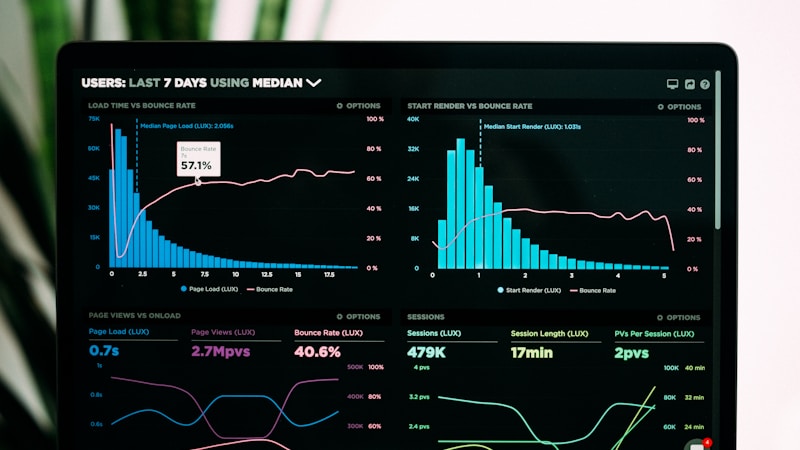
Raw rank tracking data is overwhelming. Effective dashboards distill thousands of data points into actionable insights that different stakeholders can immediately use. The key is creating views tailored to specific audiences and decision types.
Dashboard Design Principles
- Executive Dashboard: Total keywords tracked, percentage in top 3/10/20, overall SOV trend, estimated organic traffic impact, and top keyword wins/losses. Keep it to a single screen with clear trend arrows. Executives want direction and magnitude, not granularity.
- Content Team Dashboard: Top performing content by ranking keywords, pages gaining/losing positions, content gap opportunities (keywords where competitors rank but you do not), and recommended content updates. Content teams need specific action items tied to ranking data.
- Technical Dashboard: Correlation between Core Web Vitals changes and ranking changes, mobile vs. desktop ranking discrepancies, indexing status of tracked pages, and crawl budget allocation. Technical teams need data that connects their work to ranking outcomes.
- Client Reporting Dashboard: Clean visualization of agreed-upon KPIs, month-over-month and year-over-year comparisons, notable wins highlighted prominently, and next-period strategy recommendations. Client dashboards tell the story of progress and value.
Rank tracking in 2026 is simultaneously simpler and more complex than ever. The tools are more powerful and accurate than at any point in SEO history, but the SERPs they measure are more diverse, personalized, and feature-rich than ever before. The professionals who succeed are those who track rankings with context, combining position data with SERP feature analysis, device segmentation, local variations, and competitive SOV to build a complete picture of organic visibility. Integrate your rank tracking with Google Search Console data and competitive intelligence to create a measurement framework that does not just show where you rank, but tells you exactly what to do next.
Track Your Rankings with Precision and Clarity
Our platform provides daily rank tracking across devices and locations, SERP feature monitoring, competitive share of voice analysis, and automated alerting. Get crystal-clear visibility into your organic search performance and the insights to improve it. Start your free trial today.