The harsh truth about SEO reporting is this: brilliant SEO work that is poorly communicated is indistinguishable from no SEO work at all. Clients and stakeholders do not have the technical knowledge to independently evaluate your optimization efforts. They rely entirely on your reports to understand what you did, why it mattered, and what impact it had. According to a 2025 Moz survey of agency clients, 62% of clients who churned cited "unclear reporting" or "not understanding the value of SEO" as a primary reason. Meanwhile, agencies with the highest retention rates shared a common trait: exceptional reporting that transformed data into compelling narratives. This guide teaches you how to create SEO reports that clients not only understand but genuinely look forward to receiving.

What to Include in Every SEO Report
An effective SEO report balances comprehensiveness with clarity. Include too little and clients question what you are doing. Include too much and they are overwhelmed, skip the details, and still do not understand the value. The key is structuring information in layers: a high-level summary for executives, detailed metrics for marketing managers, and technical specifics available on request.
Essential Report Sections
- Executive Summary (1 page): The most critical section. Summarize organic traffic trend, revenue/lead impact, top 3 wins, top 3 priorities for next month, and overall progress toward goals. Write this as if it is the only page the client will read, because for many executives, it is.
- Organic Traffic Analysis: Total organic sessions, engaged sessions, new users, and comparison to previous period and same period last year. Break down by landing page category, device, and geography. Connect traffic changes to specific SEO activities using data from Google Analytics 4.
- Keyword Rankings: Overall visibility score, number of keywords in top 3/10/20/50, notable ranking improvements, and keywords that declined. Highlight the business impact of ranking changes (estimated traffic value gained/lost). Use data from Google Search Console for verified position data.
- Conversion and Revenue Impact: Organic conversions (leads, sales, signups), conversion rate, revenue attributed to organic search, and cost-per-acquisition comparison with paid channels. This section justifies the SEO investment in language that finance teams understand.
- Work Completed: Specific deliverables completed during the reporting period. Link optimized pages, content published, technical fixes implemented, and links acquired. Be specific: "Optimized 12 product page title tags" is better than "On-page optimization."
- Next Period Plan: What you will focus on next month and why. Connect planned activities to expected outcomes. This forward-looking section builds anticipation and demonstrates strategic thinking.
KPI Selection: Measuring What Actually Matters
The difference between a mediocre SEO report and an exceptional one often comes down to KPI selection. Including every available metric creates noise that obscures the signal. Selecting the right 5-8 KPIs focuses attention on what drives business outcomes.
Tiered KPI Framework
- Tier 1 - Business KPIs: Organic revenue, organic leads/conversions, organic conversion rate, and organic market share (SOV). These are the metrics that justify SEO investment and should be front and center in every report.
- Tier 2 - Performance KPIs: Total organic traffic, engaged organic sessions, organic CTR (from GSC), and average position for target keywords. These metrics explain how Tier 1 outcomes are being achieved.
- Tier 3 - Activity KPIs: Pages optimized, content published, links acquired, technical issues resolved, and Core Web Vitals improvements. These demonstrate the work being done but should not dominate the report narrative.
- Tier 4 - Diagnostic KPIs: Crawl errors, indexing rate, page speed scores, mobile usability issues, and schema validation. Include these only when they explain Tier 1-2 changes or when technical work was the primary focus of the reporting period.
"Most SEO reports fail because they report on activity rather than impact. Clients do not care how many title tags you optimized. They care whether those optimizations drove more traffic, more leads, and more revenue. Every metric in your report should either show business impact or directly explain a metric that does."
Data Storytelling: Transforming Numbers into Narratives
Data storytelling is the skill that transforms a spreadsheet of metrics into a compelling narrative that clients understand, remember, and act upon. It is the single most important differentiator between reports that get glanced at and reports that get discussed in board meetings.
Storytelling Principles for SEO Reports
- Context Before Numbers: Never present a metric in isolation. Instead of "Organic traffic: 45,000 sessions," write "Organic traffic reached 45,000 sessions, a 23% increase over the previous month and 67% higher than the same month last year. This acceleration correlates with the content cluster strategy we launched in Q3."
- The So-What Test: After writing any data point, ask "So what?" If you cannot immediately explain why the client should care, either provide that context or remove the data point. Every number needs a meaning.
- Narrative Arc: Structure your report with a beginning (where we were), middle (what we did and what happened), and end (where we are going). This narrative structure is how humans naturally process information, and it turns data consumption into an engaging experience.
- Highlight the Unexpected: Call out surprises, both positive and negative. A page that unexpectedly started ranking for a high-value keyword is a story. A sudden traffic drop following a Google update is a story. These moments of tension and resolution keep clients engaged.
- Use Analogies: Compare SEO metrics to concepts clients understand. "Our domain authority increased from 45 to 52 this quarter. Think of this like your credit score improving from 'fair' to 'good.' It means Google trusts our recommendations more, which makes every future optimization more effective."

Visualization Best Practices
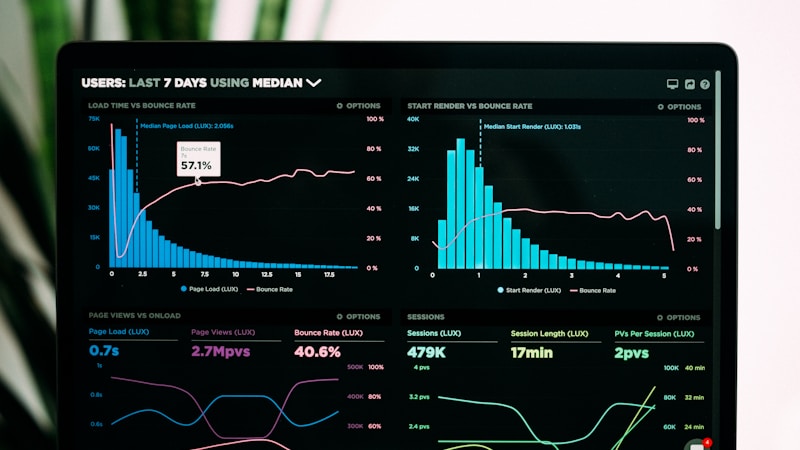
Well-designed visualizations communicate complex SEO data in seconds. Poorly designed ones confuse, mislead, or bore. The goal of every chart, graph, and table in your report is to make the right insight immediately obvious.
Choosing the Right Visualization Type
- Line Charts: Best for showing trends over time. Use for organic traffic trends, ranking position changes, and conversion rate evolution. Always include comparison periods (MoM, YoY) as additional lines to provide context.
- Bar Charts: Best for comparing categories. Use for comparing traffic across page types, keyword distribution across position ranges, or monthly work output. Horizontal bar charts work better when category labels are long.
- Pie/Donut Charts: Best for showing composition. Use sparingly and only for 2-5 categories. Traffic source distribution and device split are appropriate uses. Never use pie charts to show more than 5 segments; the human eye cannot accurately compare small pie slices.
- Tables: Best for detailed, scannable data. Use for top keyword rankings, top landing pages, and detailed KPI breakdowns. Apply conditional formatting (green for improvements, red for declines) to make tables scannable at a glance.
- Scorecard/KPI Cards: Best for headline metrics. Use large, prominent number displays for your most important KPIs (total organic traffic, conversions, revenue). Include percentage change and directional arrows for instant comprehension.
Automated Reporting: Efficiency at Scale
Manual report creation is not only time-consuming; it is also prone to errors, inconsistencies, and delays that erode client confidence. Automated reporting systems eliminate the mechanical work of data collection and formatting, freeing you to focus on analysis, insights, and strategy, which are the parts of reporting that actually add value.
Automation Tools and Workflows
- Looker Studio (Google Data Studio): Free, flexible, and integrates natively with GA4, GSC, BigQuery, and most SEO platforms via connectors. Build once, and the dashboard updates automatically. The strongest option for organizations already in the Google ecosystem.
- Agency Analytics: Purpose-built for agencies with multi-client reporting needs. Aggregates data from 80+ integrations, provides white-label templates, and automates scheduled delivery. Reduces per-client reporting time from hours to minutes.
- Databox: Real-time dashboard platform with mobile-friendly design and goal tracking. Excellent for clients who want ongoing access to their data rather than periodic report delivery.
- Custom Solutions: For organizations with unique requirements, custom reporting built on Python (pandas, matplotlib) or R, pulling data from APIs and rendering to PDF or HTML. Maximum flexibility but highest setup and maintenance cost.
Reporting Frequency: Finding the Right Cadence
The ideal reporting frequency balances client expectations, data meaningfulness, and your team's capacity. Different stakeholders need different frequencies, and accommodating this creates a reporting ecosystem rather than a single report.
Multi-Cadence Reporting Framework
- Weekly Flash Reports: A one-page summary of key metrics changes, notable ranking movements, and any urgent issues. Keep this automated and delivered via email. It maintains awareness without requiring analysis time.
- Monthly Detailed Reports: The comprehensive report described throughout this article. Monthly cadence provides enough data accumulation for meaningful trend analysis while remaining frequent enough to demonstrate ongoing value.
- Quarterly Strategic Reviews: A presentation-format review that steps back from monthly metrics to evaluate strategy effectiveness, market dynamics, and resource allocation. This is where you discuss pivots, new opportunities, and long-term planning.
- Annual Performance Review: Year-in-review analysis showing organic growth trajectory, ROI calculation, market share changes, and strategic recommendations for the coming year. This document often influences budget decisions.
Client Communication: Beyond the Report Itself
The report is only half of the communication equation. How you present and discuss the report matters as much as what is in it. The most effective client relationships include regular verbal communication that brings the report data to life.
Communication Best Practices
- Scheduled Review Calls: Walk through the report with the client on a monthly call. This prevents misinterpretation, allows real-time questions, and demonstrates your expertise beyond what any document can convey. Prepare talking points that connect data to the client's business goals.
- Proactive Communication: Do not wait for the monthly report to share news. When you achieve a significant ranking win, discover a critical issue, or identify a new opportunity, communicate immediately. Proactive communication builds trust and demonstrates engagement.
- Education Moments: Use report discussions as opportunities to educate clients about SEO concepts. When a client understands why something matters, they become a more effective partner and a stronger internal advocate for SEO investment.
- Expectation Management: Use reports to set realistic expectations for future performance. If rankings plateaued because you have captured most available positions, explain the transition from growth to maintenance. If a competitor launched an aggressive campaign, acknowledge the challenge and outline your response strategy.
"The agencies that retain clients for years are not necessarily the ones that deliver the best results. They are the ones that communicate those results most effectively. I have seen agencies with mediocre performance retain clients through exceptional reporting, and agencies with outstanding performance lose clients through poor communication. Reporting is not an administrative task. It is a client retention strategy."
White-Label Solutions for Agencies
For agencies managing multiple clients, white-label reporting solutions provide branded, professional reports that present your agency as polished and data-driven. The investment in white-label tools pays for itself in client perception and retention.
Key White-Label Features
- Custom Branding: Your agency logo, colors, and typography on every report page. Remove all third-party tool branding to present a unified, professional image.
- Template Libraries: Pre-built report templates for different client types (e-commerce, local business, SaaS, publisher) that can be customized per client. Templates reduce setup time from hours to minutes.
- Client Portals: Branded dashboards that clients can access anytime to view real-time data. This reduces ad-hoc data requests and positions your agency as transparent and technology-forward.
- Automated Delivery: Scheduled report generation and email delivery with custom messaging. Clients receive professional, branded reports on a predictable schedule without any manual intervention from your team.
Common Reporting Mistakes to Avoid
Even experienced SEO professionals make reporting mistakes that undermine client relationships. Being aware of these pitfalls helps you create reports that consistently build trust and demonstrate value.
- Data Dumping: Including every available metric without analysis or context. A 30-page report with raw data impresses no one. A 10-page report with curated insights and clear narratives builds confidence.
- Vanity Metric Focus: Reporting on metrics that look good but do not connect to business outcomes. Impressions, domain authority, and total indexed pages are meaningless to clients who care about revenue and leads.
- Ignoring Negative Trends: Hiding or minimizing declines destroys trust faster than any bad result ever could. Address negative trends honestly, explain the cause, and present your action plan. Clients respect transparency.
- Inconsistent Formatting: Reports that change format, metrics, or structure every month make it impossible for clients to track progress. Establish a template and maintain it consistently, only adding sections when there is a clear reason.
- Missing the "Why": Reporting what happened without explaining why it happened. Traffic increased 15% is a fact. Traffic increased 15% because the 8 optimized product pages now rank in the top 5 for their target keywords is an insight.
Creating SEO reports that clients love is not about being the most technically sophisticated analyst. It is about being the most effective communicator of technical results. Master the art of KPI selection, data storytelling, visual design, and strategic context, and your reports will become the foundation of long-term client relationships. Pair your reporting with data from GA4 and Google Search Console, and you will deliver reports that not only inform but inspire confidence in the SEO investment. The best report is one that makes the client excited to see next month's numbers.
Generate Beautiful SEO Reports in Minutes, Not Hours
Our platform automates data collection from GA4, GSC, and all major SEO tools, then generates polished, white-label reports with built-in data storytelling and visualization. Spend your time on strategy, not spreadsheets. Start your free trial today.